Can Bamboo Plywood Be Used Outdoors?
Short answer: do not assume that standard bamboo plywood is suitable for permanent outdoor exposure. Outdoor performance depends on the exact panel construction, adhesive bond, surface system, sealed edges, installation details and maintenance plan. HTR Bamboo should review the intended exposure before quoting a panel for an exterior or semi-exterior application.
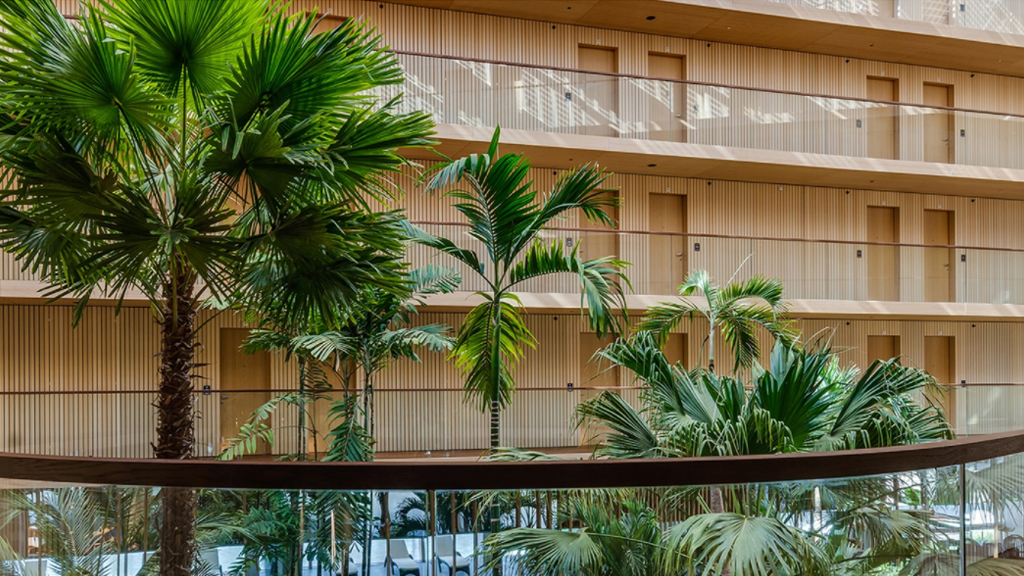
Start with the exposure, not the word “outdoor”
A covered ceiling, shopfront soffit or sheltered furniture component has a different moisture load from an uncovered deck, facade or ground-contact part. Tell the supplier whether the panel will face direct rain, standing water, condensation, strong sunlight, freeze-thaw cycles or only occasional humidity. A finish alone cannot convert an interior-bonded panel into an exterior-rated construction.
For general plywood, APA distinguishes temporary moisture exposure from bond classifications intended for long-term weather or moisture. That distinction is a useful procurement framework, but an APA document is not evidence that a particular HTR bamboo panel carries an APA rating. Ask for evidence that matches the quoted construction.
What the panel specification should confirm
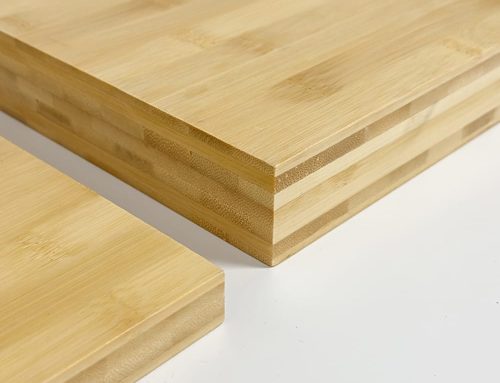
- Construction: number and orientation of layers, core material, face quality and finished thickness.
- Adhesive and bond: the adhesive system and any relevant water-resistance or bond test for the exact configuration.
- Surface system: coating type, expected maintenance and whether all faces receive the same protection.
- Edge treatment: sealing for factory edges, field cuts, drilled holes and fastener penetrations.
- Installation: drainage, ventilation, clearance from soil and details that prevent water traps.
- Sample validation: a representative sample or prototype when appearance, coating or exposure risk is important.
When bamboo plywood should not be specified
Do not use a panel for structural, load-bearing, life-safety or code-controlled exterior work unless the required engineering data, product standard and destination-market approvals are available for that use. Avoid designs with permanent immersion, trapped water or unsealed cut edges. For demanding exposure, a material specifically qualified for that environment may be the safer choice.
What to include in an exterior-use RFQ
- Application and a photo, drawing or installation detail.
- Covered, semi-exposed or fully exposed service conditions.
- Panel size, thickness, grain direction, construction and tolerance.
- Required finish, colour, edge treatment and maintenance expectation.
- Quantity, destination country or port and requested trade term.
- Required test reports, FSC claim, packing documents or market-specific evidence.
Verify documents against the quoted order
FSC Chain of Custody can help verify the certified supply-chain scope; it does not prove weather resistance. Certificate status and scope can be checked in the official FSC Search. Test reports should identify the tested product or configuration and should not be treated as blanket approval for every thickness, adhesive or finish.
For background on plywood bond classifications, see the APA Rated Sheathing data sheet. Use it to understand the questions to ask, not as a substitute for order-specific HTR documentation.
Next step
Review the bamboo plywood specification options and the document scope. Then send the application, exposure, dimensions, quantity and destination. HTR Bamboo can confirm whether an available construction is appropriate to quote, what evidence can be matched to it and whether sample validation is advisable.
Share This Story, Choose Your Platform!
About the Author: HTR Bamboo Editorial Team

Related Posts
On this page
Need bamboo specifications?
Latest Posts
Copyright 2020 – 2030 HTR Bamboo
All Rights Reserved!

 English
  German
  Spanish
  Vietnamese