Quick answer: this guide explains bamboo flooring for buyers in 2026, covering the key facts, trade-offs, and sourcing tips you need before you decide.
How to Install Bamboo Flooring on Plywood: A Step-by-Step Guide
Bamboo flooring has gained immense popularity in recent years due to its sustainability, durability, and aesthetic appeal. If you’re looking to upgrade your plywood flooring with stunning bamboo, you’ve come to the right place. In this article, we will guide you through the step-by-step process of installing bamboo flooring on plywood, ensuring a seamless and long-lasting result.
Preparing the Surface Before diving into the installation process, it is crucial to adequately prepare the plywood surface to ensure a solid foundation for your bamboo flooring. Follow these steps:
- Clean the plywood surface thoroughly: Remove any dust, debris, or adhesive residues using a broom, vacuum, or damp cloth.
- Ensure a level surface: Use a leveling compound to fill in any gaps, cracks, or unevenness on the plywood. This step is vital to prevent any future issues with the bamboo flooring.
Acclimating Bamboo Flooring Bamboo is a natural material that expands and contracts with changes in humidity and temperature. To prevent buckling or gaps in your flooring, it’s essential to acclimate the bamboo planks before installation. Here’s what you need to do:
- Unbox the bamboo flooring: Remove the planks from their packaging and leave them in the room where they will be installed for at least 72 hours. This allows the bamboo to adjust to the ambient conditions and reach equilibrium moisture content.
- Maintain optimal conditions: During the acclimation period, ensure that the room is at a temperature of 60-80°F (15-27°C) and has a relative humidity level of 40-60%.
Section 3: Installing Bamboo Flooring Now that the surface is prepared and the bamboo planks are acclimated, it’s time to install the flooring. Follow these installation guidelines:
- Lay down underlayment: Install a suitable underlayment, such as a moisture barrier or foam pad, over the plywood surface. This helps to reduce noise, provide insulation, and protect against moisture.
- Plan your layout: Determine the starting point and direction of the flooring installation. It is recommended to start against a straight wall, usually opposite the main entrance.
- Install the first row: Place the first row of bamboo planks along the starting wall, with the groove side facing the wall. Ensure a 1/2-inch expansion gap between the planks and the wall.
- Continue with subsequent rows: Connect the planks by inserting the tongue of one plank into the groove of the previous plank. Use a tapping block and mallet to ensure a tight fit. Stagger the seams between rows for added stability and visual appeal.
- Trim and fit: Use a saw to cut the last plank in each row to fit the remaining space. Remember to leave a 1/2-inch expansion gap on all sides.
- Finishing touches: Once all the planks are installed, install transition pieces, such as thresholds or molding, to cover the expansion gaps along doorways or between different flooring types.
Conclusion: Congratulations! You’ve successfully transformed your plywood flooring into a stunning bamboo surface. By following this comprehensive guide, you can enjoy the beauty and eco-friendliness of bamboo while ensuring a professional installation. Remember, proper surface preparation, acclimation, and precise installation techniques are crucial for long-lasting and visually appealing results. Enjoy your new bamboo flooring!

Further reading: FSC certification. See also HTR Bamboo’s strand woven bamboo flooring and bamboo plywood for more on bamboo flooring.
Bamboo flooring: what B2B buyers should know in 2026
Demand for bamboo flooring keeps rising as architects, importers and brands look for materials that balance performance with sustainability. Bamboo reaches maturity in three to five years, far faster than hardwood, so bamboo flooring offers a renewable supply without sacrificing strength. For buyers, the practical questions are quality, compliance and consistency from order to order.
When you evaluate bamboo flooring, start with certification. Ask for the FSC Chain-of-Custody number and verify it at info.fsc.org, request the latest formaldehyde test reports (E0 or E1, plus CARB/TSCA Title VI where relevant), and confirm the adhesive system. Pure all-bamboo products also sit outside the EU Deforestation Regulation, which can simplify due diligence for European importers. These checks protect you from variable quality and customs surprises.
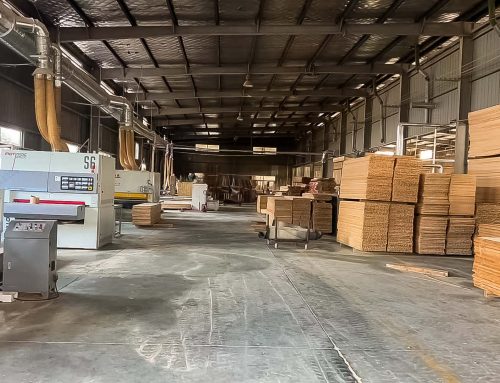
Next, look at the supplier behind the bamboo flooring. A reliable manufacturer can show factory photos, share specifications with tight tolerances, support OEM and custom sizing, and quote realistic lead times and MOQs. Consistent moisture content, color matching and packaging matter as much as the headline price, because rework and claims erase any saving.
Why source bamboo flooring from HTR Bamboo
HTR Bamboo manufactures and exports bamboo flooring worldwide, backed by FSC certification (FSC-C210923), low-emission options, and OEM/ODM flexibility for B2B wholesale buyers. The team supports buyers in Europe, Australia, the Americas and Asia with samples, documentation and dependable shipping, so you can specify bamboo flooring with confidence in 2026.
Share This Story, Choose Your Platform!
About the Author: HTR Bamboo Editorial Team

Related Posts
On this page
Need bamboo specifications?
Latest Posts
Copyright 2020 – 2030 HTR Bamboo
All Rights Reserved!

 English
  German
  Spanish
  Vietnamese