Bamboo vs Hardwood for Furniture Makers: Cost, Performance & Evidence Review
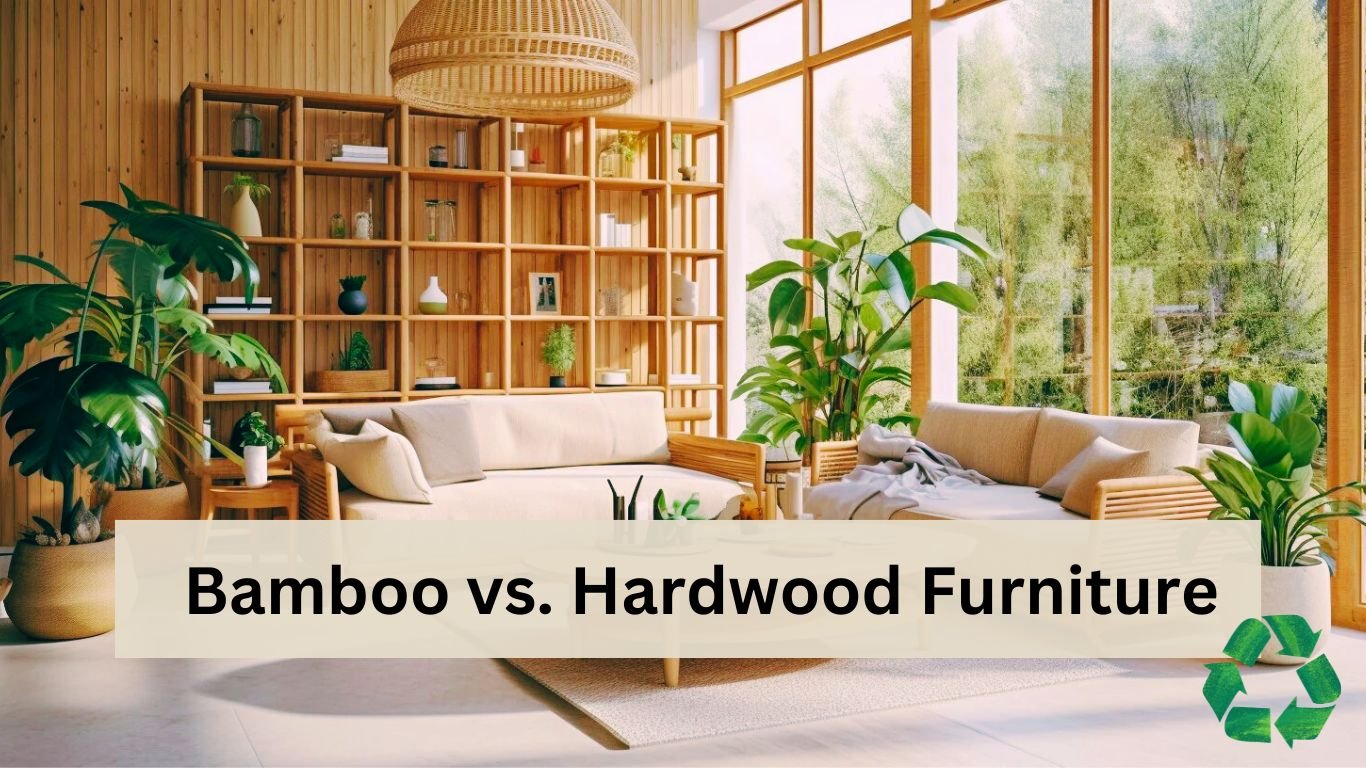
Hardwood furniture has ruled our homes and hearts for centuries due to its warmth, earthy charm, and exceptional durability.
However, an increasing number of designers, manufacturers, and consumers are choosing sustainable furniture made from bamboo and rattan.
Market-size estimates vary by source and date; treat them as context rather than as a product or procurement specification. (1)
Why?
These sustainable materials for furniture manufacturing can fit different furniture applications, but cost, performance and environmental outcomes depend on the quoted construction, process, evidence and destination. Compare like-for-like samples and landed-cost assumptions before selecting a material.
In this article, we will explore all major aspects of bamboo vs. hardwood furniture, such as cost, durability, and sustainability, so that you can decide which option best suits your needs.
First, let's understand the basics of these materials.
Bamboo vs. Hardwood - Material overview
Here’s a quick table to help you understand the major differences between the two most popular furniture materials.
| Features | Bamboo | Hardwood ( like teak, oak, maple, walnut, and ash) |
| Growth rate and harvest cycle | Growth cycle varies by species and source
Confirm harvest timing and source documentation |
Maturity varies by species and region |
| Environmental impact of harvesting | Harvest impact depends on species and management practice
The underground stem (rhizome) can sprout new shoots without requiring replantation Do not infer land-use outcomes without source-specific evidence |
Forest impacts vary by species, management and documented source (2)
Recovery timing varies by species, site and management plan. |
| Environmental impact of manufacturing furniture | Process emissions depend on energy, adhesive, finish and route
Chemical and waste outcomes require product-specific evidence |
Processing energy and emissions vary by species and plant
Compare drying, finishing and emissions on the same system boundary |
| Preferred uses | Modern furniture
Eco-friendly lifestyles Minimalist preferences |
Traditional heirloom furniture |
As evident from the table, bamboo is unquestionably a sustainable material for furniture manufacturing. But before we move on to the other comparison criteria, let’s understand the sustainability part in detail.
Environmental impact of bamboo vs. hardwood furniture
Although the Forest Stewardship Council (FSC) and the Programme for the Endorsement of Forest Certification (PEFC) are taking all necessary steps to encourage legal and responsible hardwood harvesting, clear-cutting is still widespread. In this method, all trees in a particular area are cut down.
Clear-cutting destroys animals' habitats and contributes to deforestation, soil erosion, and global warming. Worse, afforestation of the same area or an area of the same size could take decades!
Carbon and land-use evidence should be source-specific.
While the forest cover is depleting, Regional forest trends vary; confirm the source, date and system boundary before using a growth statistic. (3) Carbon storage and emissions outcomes depend on the source, management, processing and accounting boundary.
Harvest impacts should be assessed by species, management practice and documented source; do not generalize across bamboo and hardwood. At HRT Bamboo, we document the relevant harvest practice for the quoted source for the relevant source and program; confirm the supporting evidence before relying on it. FSC eligibility and environmental or social evidence depend on the applicable facility, material and order scope.
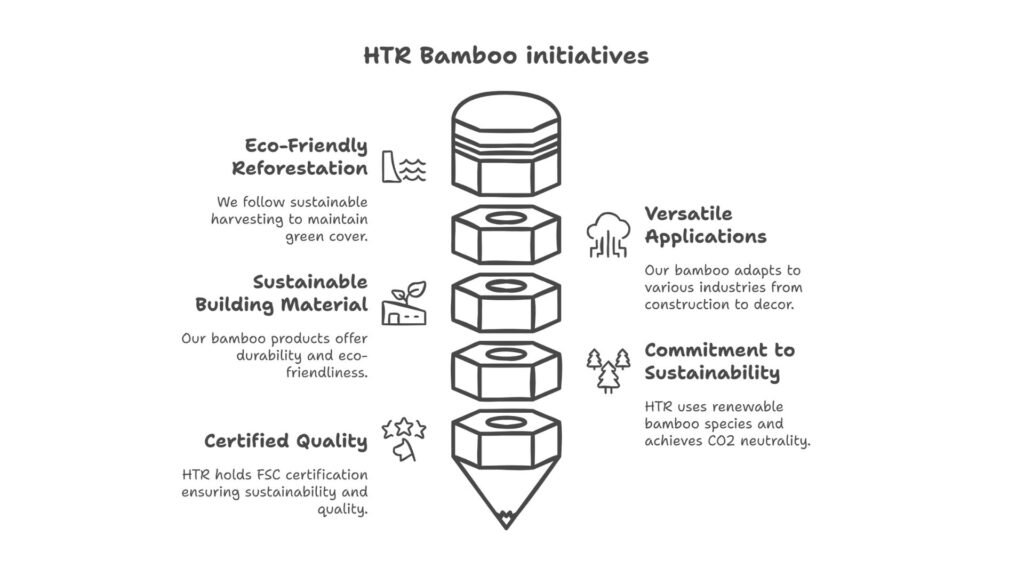
Here’s what we do -
- Energy sources and emissions should be documented for the quoted process and system boundary.
- Where a heat-recovery claim is used, confirm the facility evidence and accounting boundary.
- Waste handling and recovery depend on process evidence and the local disposal route.
Sustainability is the need of the hour, but cost matters too. So, now look at the second factor: the manufacturing cost of wood and bamboo furniture.
Bamboo vs. hardwood furniture cost comparison
Bamboo and hardwood total cost depends on species, construction, machining, finish, yield, labour, quantity and destination; compare a like-for-like quote and sample rather than assuming bamboo is cheaper.
Hardwood processing also varies by species and route; compare the same production steps, yield and landed-cost boundary.
Here is a detailed comparison of the maintenance needs/costs of bamboo vs. hardwood furniture -
| Requirements | Bamboo furniture | Hardwood furniture |
| Cleaning | Basic dusting and wiping with a damp cloth | Routine dusting and wiping with a damp cloth |
| Maintenance | Minimal maintenance
Apply bamboo-specific oil once a year to maintain the shine. |
Requires more maintenance than bamboo
Needs annual or bi-annual polishing and waxing, depending on your preference |
| Repair | Scratches and dents can be sanded and refinished | Scratches and dents can be sanded and refinished |
Now that we understand the sustainability and affordability of bamboo compared to hardwood, let's examine the third important factor: durability.
Strength and durability of bamboo furniture compared to hardwood
Janka hardness varies by bamboo format, density, test method and species; use matched test data for the quoted construction. Published hardwood values also vary by species and source; do not use this comparison as a universal performance guarantee.
Janka hardness is an industry standard for measuring a wood’s resistance to wear and denting. The higher the hardness, the stronger the wood.
This means a hardness comparison alone does not establish the dent, scratch or impact performance of a finished product used for making furniture. confirm those outcomes with the relevant test method, finish and application evidence.
If that's not enough, you will be surprised that tensile strength is direction- and construction-specific; do not infer furniture suitability from a generic comparison. That’s why bamboo is used for making load-bearing structures like scaffolding. Furniture suitability should be confirmed from the approved design, sample and applicable test criteria.
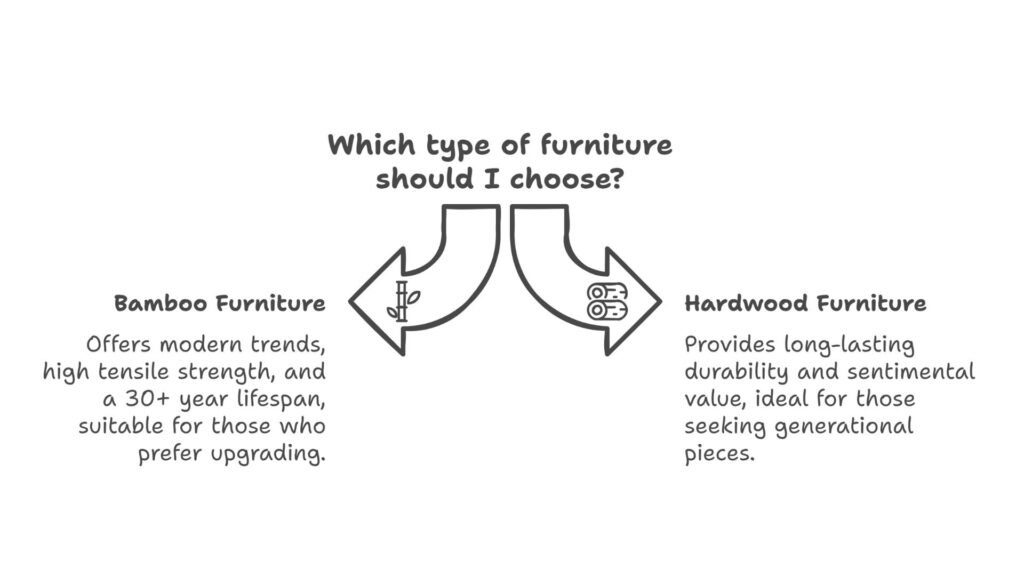
Talk about durability; hardwoods are highly durable. Teak service life varies with design, exposure, maintenance and evidence; fixed oak or hardwood lifespans should not be generalized across products or environments;
Any HTR service-life statement must be tied to the product, environment, maintenance plan and documented test or field evidence. Confirm the intended service life and maintenance requirements for the quoted application.
Heirloom hardwood furniture has sentimental value, but most consumers prefer upgrading it to match the latest trends. So, a year-long lifespan is a pretty good option.
Bamboo vs Hardwood - OEM Decision Checklist for Furniture Makers
For an OEM comparison, review these six decision inputs:
- Quoted material cost after yield, quantity and destination
- Quoted processing cost for the approved construction
- Source and capacity evidence for the required volume
- Schedule confirmed after specification and capacity review
- Design options tested on the proposed format
- Target-market fit and substantiated claims
A bamboo option may fit a target cost and market position; confirm with a like-for-like quote, sample and landed-cost review. Let’s look at some practical examples of how you can use our bamboo plywood and veneer to manufacture trendier, plush-looking furniture at affordable prices.
Bamboo Plywood & Veneer - Application Review
Moisture uptake, load and warping depend on construction, adhesive, finish and test method; confirm matched data for the quoted panel.
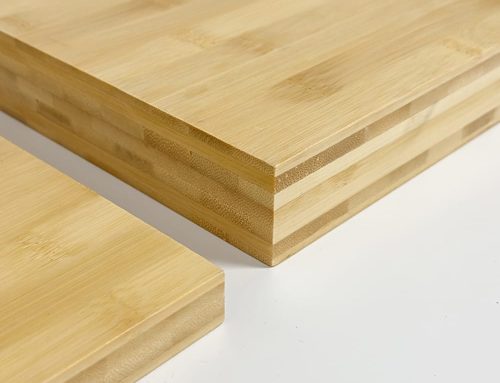
Our bamboo plywood can be evaluated for cabinets, shelves and tabletops when span, support, load, edge and finish requirements are confirmed. Due to its unique wood-like appearance, we also recommend it for making panels for walls and ceilings, which give a natural, minimalist look.
Not just residential, our plywood can withstand decades of commercial use.
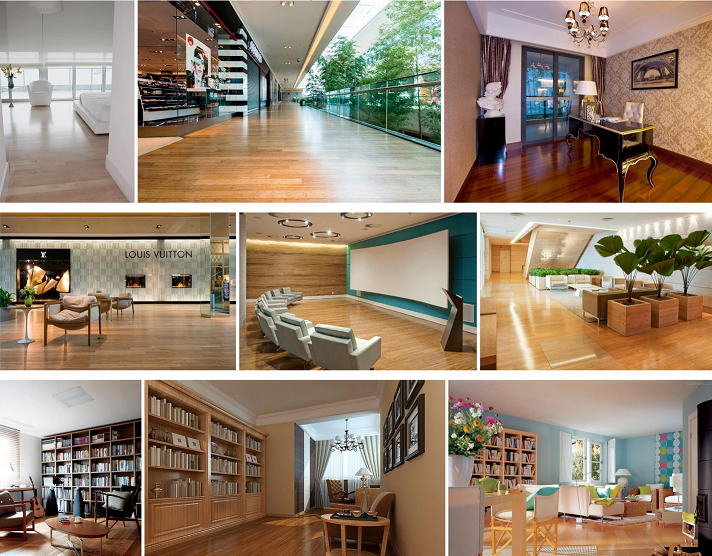
Our 0.05mm veneer is available in many premium finishes. It is ultra-thin and flexible enough to be applied to curved furniture surfaces safely. The veneers mimic rare and expensive solid wood, making it easier to provide plush-looking furniture to your customers at a much lower cost.
Bamboo + Wood - A hybrid approach to capitalize on the uniqueness of both materials
Here are a few ideas we recommend.
- Make chairs and tables with bamboo and use hardwood on arms and inlays for a decorative touch.
- Build tabletops with bamboo and use a thin layer of hardwood veneer for a premium look.
- Use bamboo plywood for cabinet doors with solid hardwood edging for a luxurious touch.
- Have old furniture like a dining table or bed lost its charm? Use it as a frame. Instead of replacing it, cover it with our bamboo veneer to upgrade it at a low cost. Recycling can save you money while reducing your carbon footprint. Our bamboo products use Adhesive emissions should be verified for the quoted construction; do not infer indoor-air performance from a generic product statement.
These are just some ideas. Be creative and make your decisions based on your buyers’ preferences.
Wrap up
Sustainability claims should be supported by current product and supply-chain evidence. For an OEM decision, compare construction, test, sample, compliance, landed cost and service-life assumptions. Thankfully, many people are willing to go the extra mile to reduce their carbon footprint. It's time for you to join the revolution by encouraging people to opt for sustainable furniture that makes them proud.
If you need help or have any questions, send the application, dimensions, quantity and destination for a specification review.
For an OEM comparison, review the technical catalogs and wholesale bamboo products, then request a quote with the application, construction, quantity and destination.
Share This Story, Choose Your Platform!
About the Author: HTR Bamboo Editorial Team

Related Posts
On this page
Need bamboo specifications?
Latest Posts
Copyright 2020 – 2030 HTR Bamboo
All Rights Reserved!

 English
  German
  Spanish
  Vietnamese