Best finish for bamboo plywood: Sealer, oil or polyurethane?

On this page
To finish bamboo plywood, choose a coating that lists the substrate and intended use, follow its preparation and curing instructions, and approve the complete system on a representative offcut. A clear water-based topcoat and a compatible penetrating oil create different appearances and maintenance needs. The panel construction, edges and service environment matter as much as the finish name.
Why Finish Bamboo Plywood?
Finishing bamboo plywood isn’t just about aesthetics—it’s an essential step for preserving quality. Here’s why:
1. Increase Durability
A compatible finish can help manage surface exposure, but it does not prevent cracking, warping or moisture movement on every panel. Confirm the construction, adhesive, edges, exposure and maintenance plan for the actual application.
2. Enhance Aesthetics
A great finish brings out bamboo's gorgeous grain patterns, enriches color depth, and delivers a refined, premium look. Whether you’re designing furniture or wall panels, the right finish can elevate bamboo's natural appeal.
3. Protection From Environmental Damage
UV exposure, stains, and scratches can dull bamboo’s appearance over time. A finish can help manage surface exposure, but appearance and service behaviour still depend on the panel, coating, preparation, use and maintenance. Approve the complete system on a representative sample.
4. Promote Sustainability
If indoor emissions matter, compare the coating data sheet and the applicable project requirements; a low-VOC label alone does not establish indoor-air performance or sustainability for the complete panel system.
A reviewed finish can support the intended appearance and cleaning routine when the panel, coating and service conditions are matched; approve the complete system on a representative sample.
Best Finishing Options for Bamboo Plywood
Not all finishes are created equal. The best finish for your project depends on factors like the environment, usage, and desired look. Here’s a breakdown of your options:
| Finish Type | Pros | Cons | Best For |
|---|---|---|---|
| Natural Oils (Tung Oil, Linseed Oil, Mineral Oil) | Lower-build appearance; maintenance can be specified | Requires reapplication | Indoor furniture, cutting boards |
| Hardwax Oil | Lower-build finish; surface behaviour depends on the product | Costly, limited color options | High-traffic areas, flooring |
| Polyurethane (Water-Based) | Clear-film option; cure and surface behaviour depend on the product | May alter bamboo color | Kitchens, bathrooms |
| Lacquer (Nitrocellulose, Acrylic) | Smooth, glossy or matte | Application and VOC requirements depend on the product | Cabinets, furniture |
| Powder Coating | Requires a qualified substrate/coating review | Requires special equipment | Only a qualified exterior system after panel review |
Which finish should you choose?
Short answer: For indoor furniture and cabinetry, a clear water-based topcoat is a practical choice when you want to keep bamboo light and add protection against scratches and scuffs. A penetrating oil leaves a lower-build, more natural surface, but use a product that specifically lists bamboo as suitable.
For example, Osmo lists Wood Wax Finish Extra Thin as suitable for bamboo. Its standard Polyx-Oil guidance directs bamboo users to the Extra Thin product. For a clear interior topcoat, Minwax describes its water-based Polycrylic finish as a clear coating for interior furniture and light woods. These links are examples, not endorsements. Test the complete finish system on an offcut before production.
For exterior work, use only a coating rated for outdoor exposure. A UV-resistant coating does not make an interior-grade panel suitable outdoors. Confirm the bamboo layup, adhesive and edge-sealing requirements before specifying the panel.
Step-By-Step Guide to Finishing Bamboo Plywood
Follow these steps to get professional-looking results:
1. Prepare the Surface
- Sanding
Start by lightly sanding the bamboo plywood with 180-220 grit sandpaper. This creates a smooth surface, removes imperfections, and allows the finish to adhere better.
- Dust Removal
Wipe the surface clean with a damp microfiber cloth to remove all sanding dust. A clean surface ensures an even finish.
2. Choose and Apply the Finish
- For Natural Oils
Apply the oil using a soft cloth. Rub it in evenly, allow the wood to absorb it, and wipe off any excess. Repeat 2-3 times for a deeper finish.
- For Hardwax Oil
Use a brush to apply thin coats. Buff evenly with a cloth or pad, then allow it to dry for 24 hours before applying the next coat.
- For Polyurethane or Lacquer
Apply with a high-quality brush or spray. Sand lightly between coats for a smooth finish, and allow ample drying time between layers.
- Outdoor Use
Use only a finish system whose manufacturer rates it for exterior exposure. Confirm that the plywood construction, adhesive and sealed edges are suitable for the same exposure.
Pro Tip:
Test the finish on a small offcut of bamboo plywood to see how the color and texture look when applied.
Common Issues and Solutions When Finishing Bamboo Plywood
Even with careful work, some issues might come up. Here’s how to address them:
| Problem | Cause | Solution |
|---|---|---|
| Uneven absorption | No sealing or priming applied | Use a pre-stain conditioner or primer. |
| Sticky surface after drying | Excess oil or finish applied | Wipe away excess and allow proper drying time. |
| Fading color over time | UV exposure | Use UV-resistant finishes to protect the color. |
| Scratch marks | Low-quality finish | Opt for a stronger finish like hardwax oil. |
Finish names are not specifications
Check the coating data sheet for substrate suitability, preparation, number of coats, drying conditions and maintenance before production.
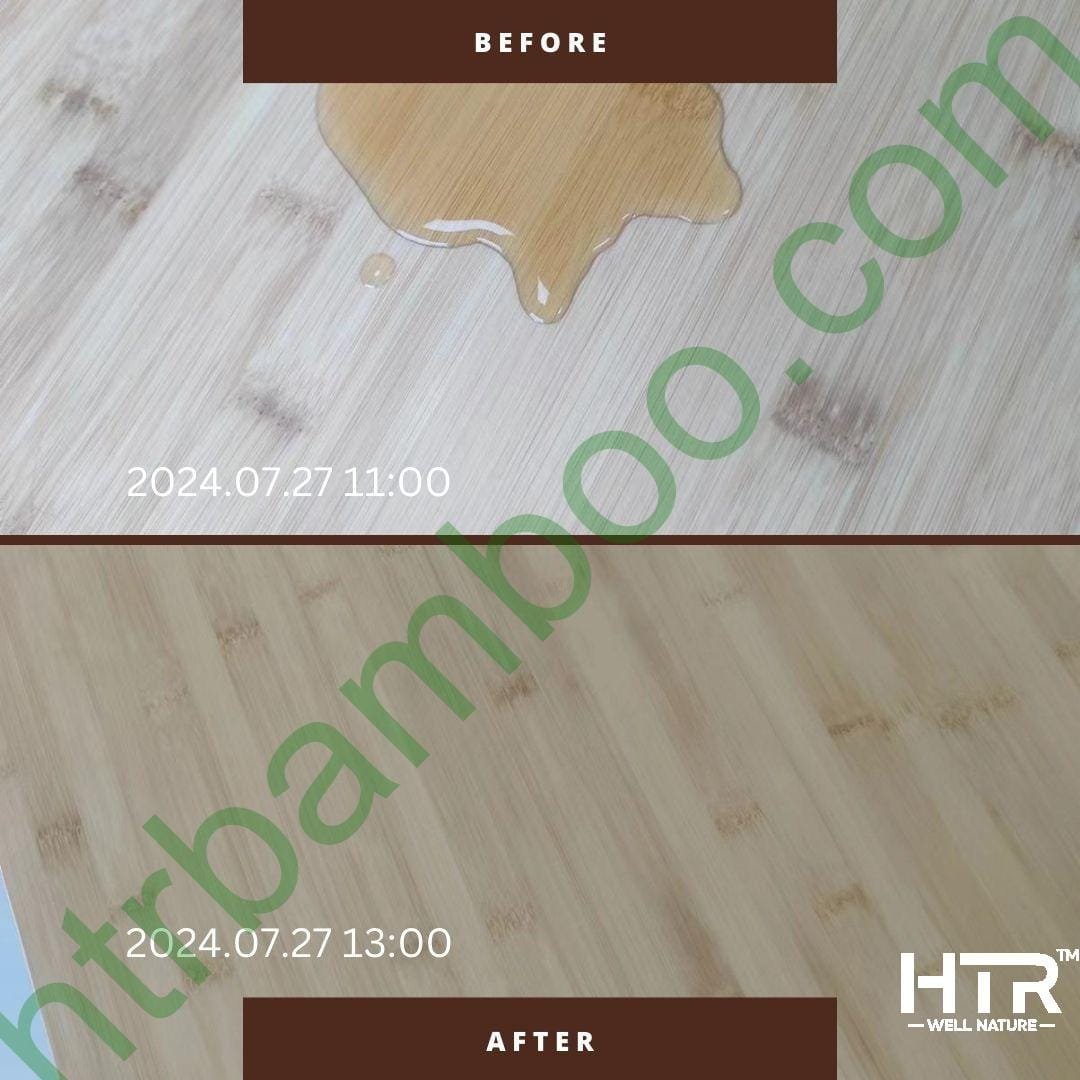
Real-World Coffee Stain Test: Before & After Results
This was a workshop demonstration on one bamboo plywood sample coated with water-based PU, not a standardized performance test. Coffee remained on the surface for 10 minutes before it was wiped with a damp microfiber cloth.
Test Details:
- Procedure:
We applied coffee to a clearly marked area of the bamboo plywood and let it sit for 10 minutes. Then, using a damp microfiber cloth, we wiped the area to simulate typical cleaning practices.
- Results:
On this sample, the coating slowed absorption and the coffee wiped away without an obvious residual mark. Results depend on the coating, film build, cure time, surface preparation and exposure. Approve a finished sample before production.
- Video Demonstration:
The accompanying video records the procedure on this sample. It does not establish a standardized stain-resistance rating.
Conclusion from the Test:
This single-sample coffee demonstration shows how one water-based PU finish behaved under the recorded procedure; it does not confirm stain resistance for every coating, panel or application. Indoor kitchens and bathrooms still require an application-specific finish, edge and maintenance review.
Long-Term Maintenance for Bamboo Plywood
Once you’ve finished your bamboo plywood, proper care is essential to maintain its beauty:
- Clean Regularly: Wipe with a damp microfiber cloth to remove dust and spills. Avoid harsh chemicals that can damage the finish.
- Maintain the finish: Inspect the surface for wear and follow the coating manufacturer's maintenance and recoating instructions. The interval depends on the finish, use, cleaning and exposure.
- Repair Scratches: Lightly sand affected areas and refinish with the original finish to restore a smooth surface.
Choose maintenance products that are compatible with the cured finish and follow the coating manufacturer's instructions; sustainability claims depend on the product and evidence, not the label alone.
Frequently asked questions
OEM finish approval checklist
Before production, approve the complete panel-and-coating system for the intended use instead of choosing a finish name alone.
- Panel: record species/material, layup, thickness, adhesive, edges and surface preparation.
- Finish: record product, substrate suitability, number of coats, cure conditions, VOC/emissions data and maintenance instructions.
- Exposure: define indoor/outdoor use, moisture, UV, cleaning, temperature and service environment.
- Supply scope: agree full sheets or parts, the faces, reverse, edges and cut-outs to finish, and whether machining happens before or after coating.
- Validation: test an offcut or representative sample and keep the approval record with the OEM specification.
Need prefinished or custom bamboo plywood?
Send your application, panel construction, thickness, dimensions, finish reference, quantity and destination. Use the checklist above to define the finishing and machining scope; HTR will confirm available options before quoting.
Request a representative bamboo plywood sample before production →
Share This Story, Choose Your Platform!
About the Author: HTR Bamboo Editorial Team

Related Posts

On this page
Need bamboo specifications?
Latest Posts
Copyright 2020 – 2030 HTR Bamboo
All Rights Reserved!

 English
  German
  Spanish
  Vietnamese