Quick answer: there is no single best finish for every bamboo countertop. For an indoor worktop, compare a worktop-rated oil or oil-wax system when a natural feel and a defined maintenance route matter, with a compatible film-forming coating when the brief calls for a continuous sealed surface. The finish maker must confirm suitability for the exact substrate, intended use and, where relevant, food contact after cure. Approve the faces, edges and cut-outs on a representative sample.
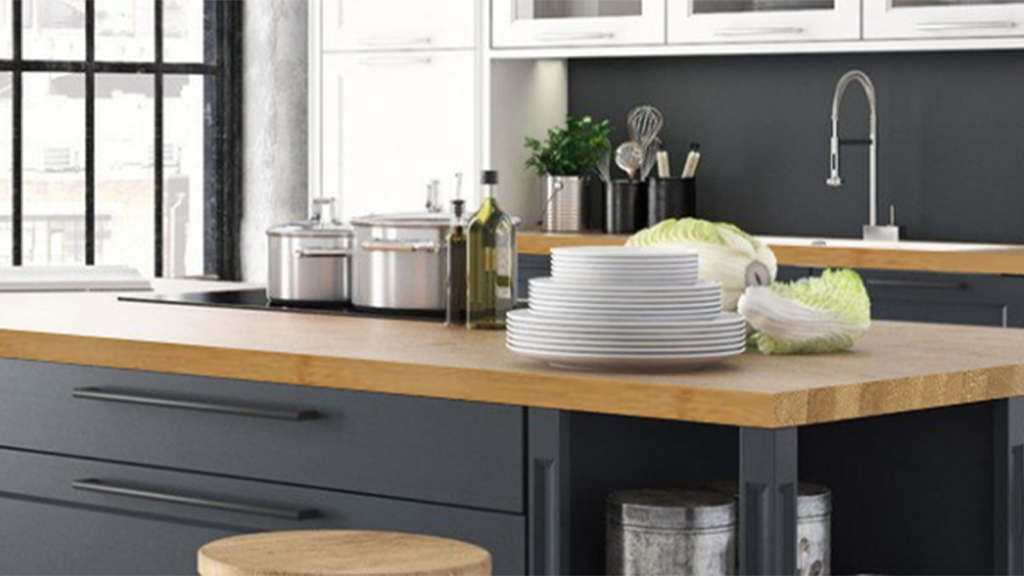
Best finish for bamboo countertops: how to choose
Use the intended service conditions and the exact product documentation to shortlist a finish. These routes solve different briefs:
Oil or oil-wax system
May fit: indoor worktops where a natural appearance and a documented maintenance route are priorities.
Verify: substrate suitability, preparation, coats, cure, cleaning, recoat instructions and any food-contact declaration for the exact product.
Film-forming clear coating
May fit: a brief that calls for a continuous sealed surface and specified sheen.
Verify: adhesion to the proposed bamboo panel, full cure, edge and cut-out sealing, allowed cleaners, and the repair or refinishing route.
Unfinished, buyer-applied
May fit: projects where the fabricator controls machining and applies the finish after cutting.
Verify: responsibility for conditioning, sanding, compatibility, newly exposed edges and protection before installation.
Factory-finished sample route
May fit: repeat OEM programmes that need the coating scope recorded before production.
Verify: faces, reverse, edges, cut-outs, colour and sheen range, sample acceptance, production checks and packing protection.
Examples of product-specific evidence: Osmo publishes TopOil technical information for wooden worktops, and Rubio Monocoat publishes a food-contact declaration for Oil Plus 2C on a food-safe wood surface. These examples show why the exact product, substrate and document scope matter; they are not a statement that HTR supplies or recommends either brand.
How to protect and maintain a bamboo countertop
- Clean with care: Use a mild, non-abrasive cleanser or a mixture of mild soap and warm water to clean the surface of your bamboo countertop. Avoid using harsh chemicals or abrasive sponges that could damage the bamboo.
- Dry thoroughly: After cleaning, make sure to dry the countertop thoroughly with a soft cloth to prevent any moisture from seeping into the bamboo.
- Use cutting boards and trivets: To prevent scratches and heat damage, always use cutting boards when chopping or preparing food on the bamboo countertop. Similarly, use trivets or hot pads when placing hot pans or dishes on the surface.
- Use the approved finish system: Follow the exact maker’s preparation, coat, cure, cleaning and recoat instructions. Do not treat a generic “food-safe” label as evidence for a different product, substrate or application.
- Avoid excessive moisture: Bamboo is susceptible to water damage, so be mindful of excessive moisture. Wipe up spills promptly and avoid leaving wet items or standing water on the countertop surface.
How do you choose a finish for an OEM bamboo countertop?
Specify the complete build before comparing finish names: panel construction and adhesive, dimensions and exposed edges, intended indoor use, expected moisture and heat, cleaning products, sheen and colour, and any food-contact requirement. Ask for the coating technical data and care instructions that apply to the quoted system.
Sample approval: apply the proposed system to a representative offcut or sample. Record surface preparation, coat count, cure conditions, appearance, edge treatment and agreed acceptance checks. A sample helps compare the proposed build; it does not prove production-batch performance or replace configuration-specific documents.
Order evidence: if certification, emissions or other compliance evidence matters, verify the certificate or report scope against the quoted countertop construction and destination. Do not assume one report covers every panel, adhesive, finish or use case.
Turn the care brief into an OEM specification
Send the dimensions, construction or reference panel, finish and colour, edge detail, cut-outs, application, quantity, destination and required evidence. HTR Bamboo can review the brief, a representative sample route and the documents available for the quoted configuration.
Plan a representative finish sample or request a finished-countertop review →
Related HTR resources: compare bamboo plywood construction and finish options, review the bamboo plywood finishing guide, or prepare a representative sample request.
Practical care boundaries
Use gentle cleaning and prompt drying unless the approved finish instructions say otherwise. Protect the surface from standing water, direct cutting and hot cookware, and inspect edges, joints and cut-outs where moisture can enter.
Do not set a universal recoat interval. Recoat timing depends on the finish maker’s instructions, actual wear, cleaning and exposure. If the intended use includes food contact, require evidence for the specific coating and finished construction instead of assuming that bamboo or a generic oil is suitable.
For production, keep the approved sample, finish schedule, care sheet, packaging plan and any order-matched certificate or test scope together. Confirm lead time and route-specific documents in the written quotation rather than relying on a generic delivery promise.
Buying finished countertops or cut parts at volume? Send the application, panel construction, dimensions, exposed edges, cut-outs, finish reference, quantity and destination.
Share This Story, Choose Your Platform!
About the Author: HTR Bamboo Editorial Team

Related Posts
On this page
Need bamboo specifications?
Latest Posts
Copyright 2020 – 2030 HTR Bamboo
All Rights Reserved!

 English
  German
  Spanish
  Vietnamese