Quick answer: this guide explains bamboo flooring for buyers in 2026, covering the key facts, trade-offs, and sourcing tips you need before you decide.
Bamboo Flooring: Sustainable Benefits Shaping Modern Interior Design
Bamboo flooring has surged from niche appeal to a mainstream solution in the world of sustainable design. As eco-conscious homeowners and commercial developers prioritize green building practices, the bamboo flooring market continues to expand rapidly. This shift is fueled by growing awareness of sustainable bamboo flooring benefits, advances in engineered bamboo flooring technologies, and the growing demand for eco-friendly flooring options that blend durability, style, and environmental responsibility.
Why Bamboo Flooring Is the Smart Choice for Sustainable Home Renovation
The core allure of bamboo flooring lies not only in its natural beauty but in its environmental credentials. Bamboo is a fast-growing grass harvested in three to five years, significantly faster than the decades hardwoods require. This makes bamboo one of the most sustainable flooring materials available today.
Strand-woven bamboo flooring, in particular, offers superior hardness and durability. With a Janka hardness rating often exceeding 3,000 lbf (compared to around 1,290 lbf for red oak), strand-woven bamboo is well-suited for both residential and commercial applications, ensuring longevity even under heavy wear.
Performance and Health: Meeting Modern Standards
Bamboo flooring excels as low-VOC flooring, often certified under FloorScore certification and GREENGUARD Gold, ensuring that these floors support healthier indoor air environments. Compliance with CARB Phase 2 TSCA Title VI formaldehyde regulations confirms that modern bamboo floors meet stringent emissions standards, making them ideal for sensitive environments such as homes with children and hospitality spaces.
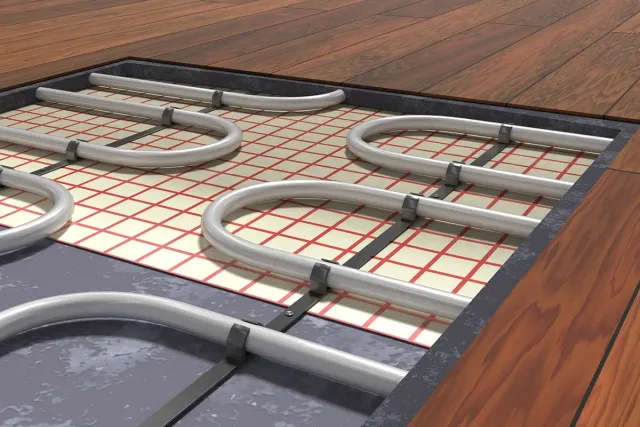
Additionally, many bamboo flooring products are radiant heat compatible flooring, enabling efficient integration with modern heating systems without compromising stability or performance.
Design Trends: Style Meets Functionality
Bamboo flooring effortlessly adapts to current design trends in modern interior design with bamboo. Wider and longer planks, wide plank bamboo flooring, have become highly popular for their ability to visually expand spaces, while patterns such as herringbone bamboo flooring bring a sophisticated aesthetic.
The rise in click-lock bamboo flooring systems also simplifies installation processes, making bamboo accessible for both professional installers and DIY enthusiasts.
Bamboo vs Hardwood: A Comparative Insight
Choosing between bamboo flooring and traditional hardwood involves several considerations:
- Sustainability: Bamboo’s rapid renewability and lower embodied carbon make it a more environmentally conscious choice.
- Durability: Strand-woven bamboo’s hardness often surpasses many hardwood species, translating to enhanced resistance against dents and scratches.
- Indoor Environment: Bamboo typically offers better indoor air quality with compliant finishes (low-VOC, FloorScore and GREENGUARD certified).
- Cost: Bamboo flooring offers a cost-effective alternative with a favorable lifecycle and lower maintenance needs.
From a professional standpoint, bamboo is not just competitive—it often outperforms hardwood in sustainability and durability metrics.
Installation and Maintenance Essentials
Bamboo floor installation can be achieved through floating click-lock formats, glue-down, or nail-down methods, allowing flexibility depending on the substrate and project requirements. Ensuring proper acclimation before installation mitigates moisture-related risks such as cupping or gapping.
Effective bamboo floor maintenance practices — including routine sweeping, damp mopping with manufacturer-approved cleaners, and protecting flooring from direct sunlight — extend product life and maintain its natural beauty.
Closing Thoughts: The Expanding Role of Bamboo Flooring in Sustainable Living
The expanding bamboo flooring market demonstrates an industry-wide commitment to marrying eco-consciousness with functional design. As certified FSC-certified bamboo and compliant materials become more widely available, architects, designers, and homeowners have increasingly responsible options for creating beautiful, durable, and sustainable spaces.
Incorporating bamboo flooring into your home or project not only honors the principles of biophilic design flooring but also aligns with global imperatives for greener, healthier buildings. Given the performance, aesthetic appeal, and environmental advantages, bamboo flooring is clearly a smart and future-facing choice.
Further reading: Bamboo flooring. See also HTR Bamboo’s strand-woven bamboo flooring and bamboo plywood for more on bamboo flooring.
Share This Story, Choose Your Platform!
About the Author: HTR Bamboo Editorial Team

Related Posts


On this page
Need bamboo specifications?
Latest Posts
Copyright 2020 – 2030 HTR Bamboo
All Rights Reserved!

 English
  German
  Spanish
  Vietnamese