Ultra-Thin Bamboo Veneer: 0.3–1.0mm OEM Guide
Ultra-thin bamboo veneer is a sliced bamboo surface layer from 0.3mm, with a cellulose fleece-backed option for lamination. HTR lists 0.3mm and 0.5mm loose sheets and a 0.6mm fleece-backed structure in natural, carbonized and zebra tones, with listed sheets up to 3000 x 1000mm. Adhesive, emissions data and FSC claim scope must be confirmed for the quoted construction, backing and destination. This guide covers the specifications, applications, comparison points and quote inputs.
What is ultra-thin bamboo veneer?
Ultra-thin bamboo veneer is a bamboo face sheet under 1mm, precision-sliced from laminated bamboo blocks rather than rotary-peeled like wood. Grain orientation, thickness and backing affect movement and handling. Confirm the side-pressed (vertical) or plain-pressed (horizontal) grain, backing, substrate, adhesive, process and approved sample for the intended application.
Colours and styles
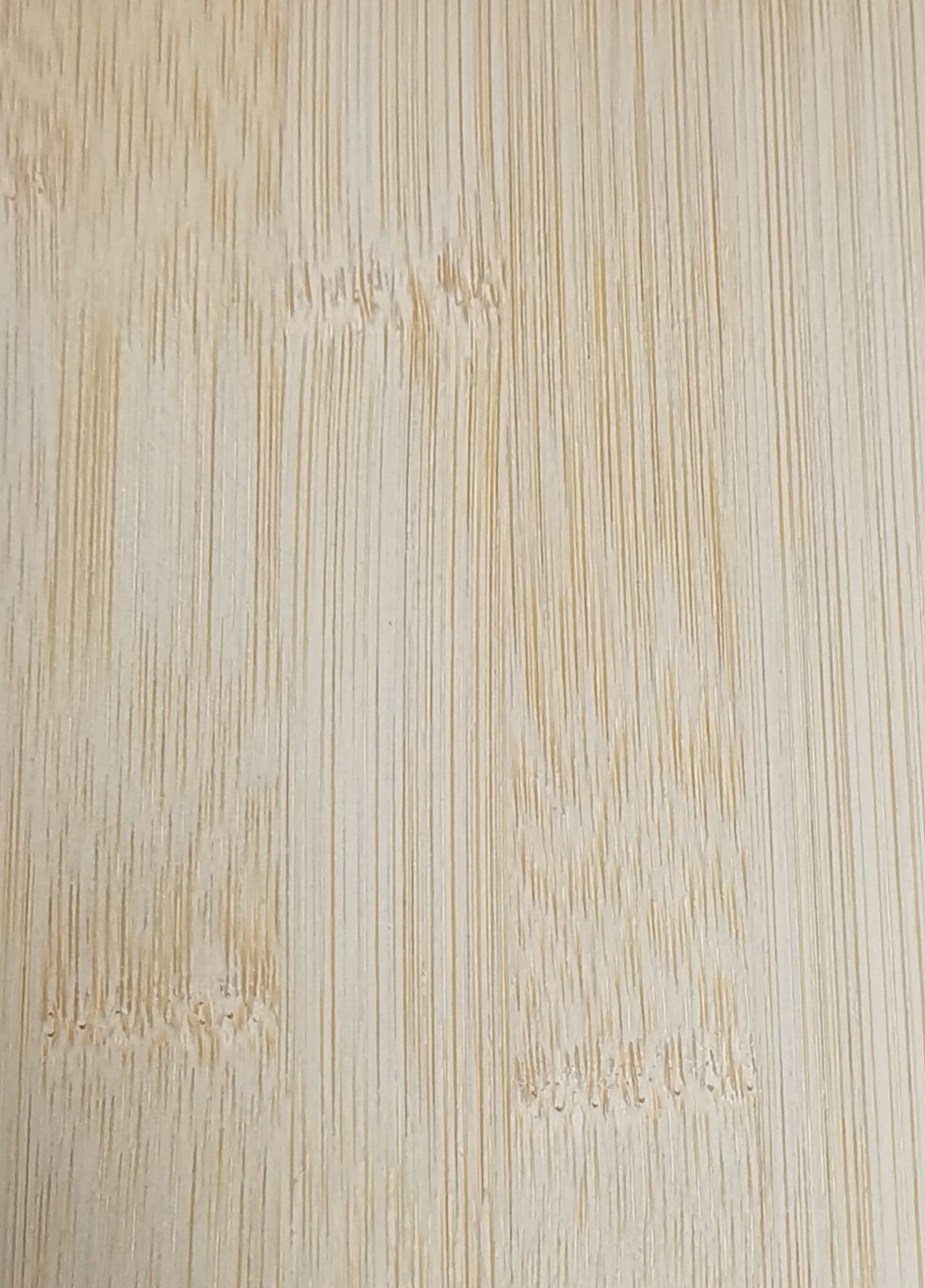
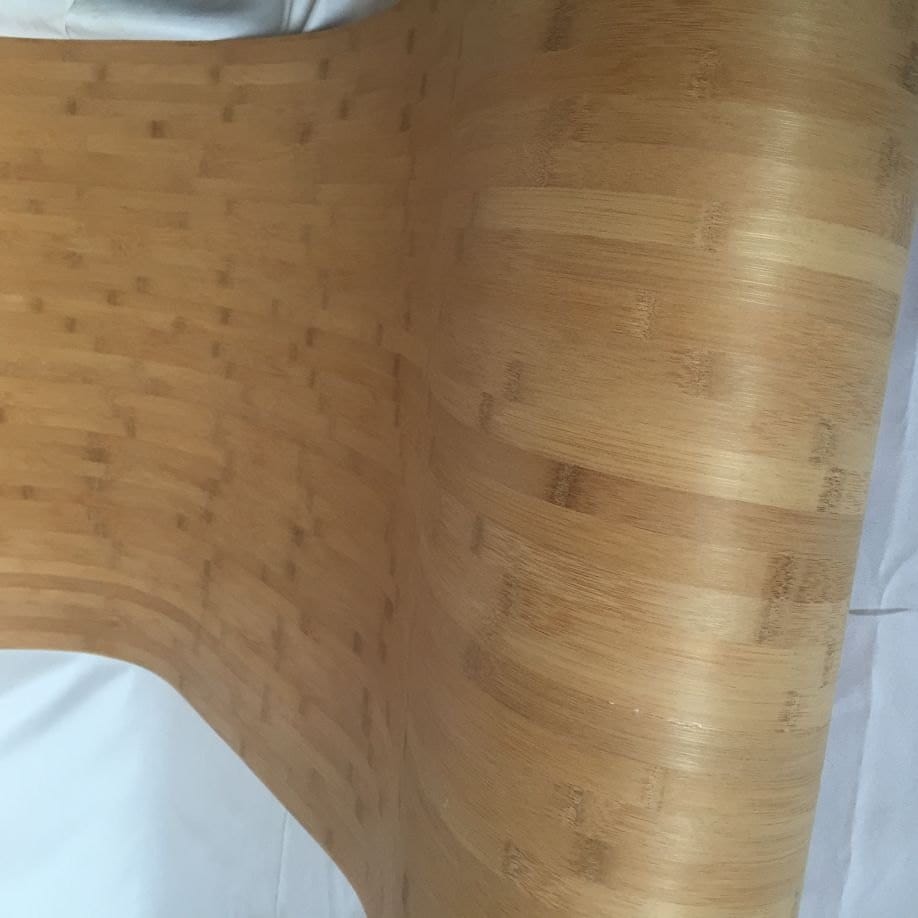
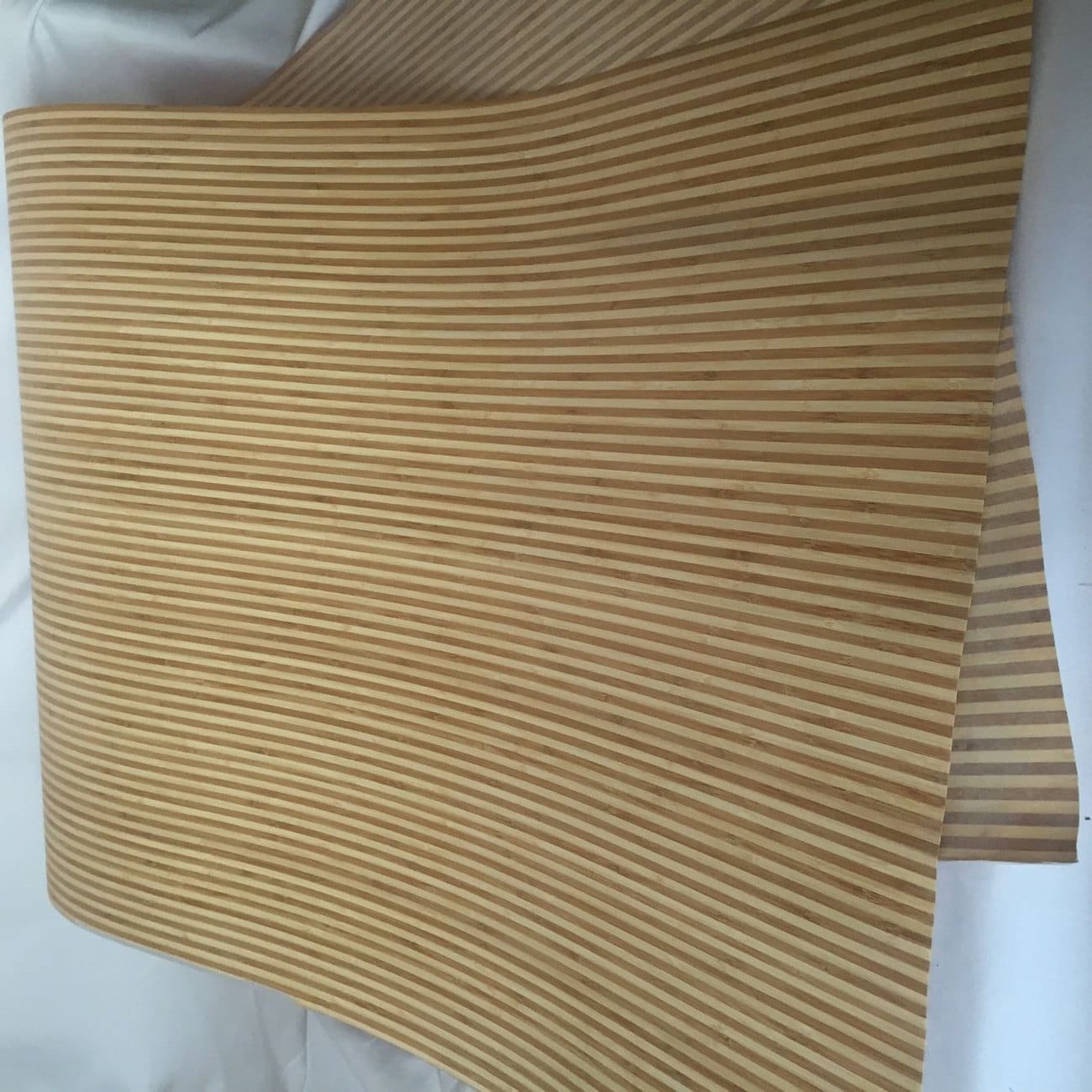
Bamboo veneer is offered in three signature looks: natural pale grain, carbonized amber, and striped zebra. All are available in plain-press or side-press grain.
Thickness and size specifications
The bamboo veneer is offered in three standard thicknesses, with a precision fleece-backed structure as the flagship. Specs:
| Spec | Options |
|---|---|
| Loose veneer thickness | 0.3mm / 0.5mm (laminated and woven styles 1.0mm) |
| HTR Veneer structure | 0.6mm = 0.5mm thermally-modified bamboo + 0.1mm cellulose fleece backing (D3 PVAC) |
| Standard sheet sizes | 2500 x 430 / 2500 x 630 / 2500 x 860 mm |
| Custom size | Length up to 3000mm, width up to 1000mm; thickness 0.3 / 0.5 / 0.6mm |
| Grain / press | Plain-press (horizontal) or side-press (vertical) |
| Colour / style | Natural / Carbonized / Zebra; also Laminated, B-Grade and Woven |
| Adhesive / emissions evidence | Confirm the adhesive system, claimed emissions class, water-resistance classification and applicable report for the quoted structure. |
| Panel option | Veneer bonded to MDF core: 12 / 15 / 18 / 21 / 25mm |
Technical performance
The fleece-backed structure has configuration-specific processing references. Match the structure, adhesive, equipment, test method and approved sample before production:
- Thermal processing reference: the 220°C / 90-second figure is a reference point for the listed structure; confirm test method, equipment and sample before production.
- Moisture and bonding reference: the 72-hour D3 / EN 204 result is configuration-specific; request the report and confirm the adhesive and lamination system.
- Mechanical evidence: the 35 N/cm² value is a reference result for the tested structure; request order-matched data where relevant.
- Substrate bonding: confirm the MDF/plywood/particleboard density, grade, surface preparation and adhesive for the quoted application.
- Compliance: confirm emissions and certification evidence for the quoted construction, destination and licence scope.
Applications for ultra-thin bamboo veneer
It is chosen wherever a real bamboo surface must sit on a thin, light, or curved substrate. Common uses:
- Musical instruments: guitar tops and backs, speaker and loudspeaker cones, drum wraps.
- Consumer electronics: phone backs, laptop lids, headphone cups, remote housings.
- Model-making and prototyping: architectural models, RC and drone skins, laminates.
- Luxury packaging and stationery: rigid-box surfacing, notebook covers.
- Furniture and interior surfacing: edge-banding, curved fronts, wall and ceiling panels.
- Automotive and marine interior trim: dashboards, door cards.
Ultra-thin bamboo veneer vs wood veneer
Compare the quoted bamboo and wood veneer constructions by thickness, grain, backing, substrate, adhesive, processing method and relevant sample or test evidence. Do not infer stability, strength or handling from the material name alone.
| Ultra-thin bamboo veneer | Wood veneer (under 1mm) | |
|---|---|---|
| Listed reference thickness | 0.3mm; confirm current format and tolerance | Varies by species, cut and supplier |
| Movement / handling evidence | Confirm grain, backing, adhesive, substrate, process and sample result | Confirm species, cut, backing, adhesive, substrate, process and sample result |
| Grain appearance | Node pattern varies by press and cut | Figure varies by species and cut |
| Sustainability | Growth cycle varies by species and management; request sourcing evidence | Species and management determine the comparison |
Certifications and compliance
Buyers in the EU, US, Australia and Japan should match the quoted veneer construction to the destination requirements. FSC claim eligibility, emissions evidence and SGS/BV or other test reports are confirmed by product, backing, adhesive, destination and licence scope. This decorative veneer is non-structural in the described applications; confirm any market-specific marking or document requirement with the importer or broker.
How to source ultra-thin bamboo veneer
Send these six inputs for a sample and quotation review:
- Thickness (0.3mm / 0.5mm / 0.6mm fleece-backed / 1.0mm laminated)
- Grain (side-press / plain-press) and colour (natural / carbonized / zebra)
- Format (loose veneer sheet or veneer-on-MDF panel)
- Sheet size and monthly or annual volume (MOQ)
- Application and substrate (so we match backing and adhesive)
- Requested evidence (for example, an FSC claim or emissions/test report), including destination and required wording
Frequently asked questions
Request a sample or production RFQ review
Need ultra-thin bamboo veneer to spec? See our Bamboo Veneer range and Certifications, then contact us with thickness, backing, application, quantity and destination. Sample format, cost, courier method and preparation timing are confirmed after review; a sample does not establish production tolerances, certificate coverage or final freight/customs terms.
Share This Story, Choose Your Platform!
About the Author: HTR Bamboo Editorial Team

Related Posts
On this page
Need bamboo specifications?
Latest Posts
Copyright 2020 – 2030 HTR Bamboo
All Rights Reserved!

 English
  German
  Spanish
  Vietnamese