Engineering Brief: Precision Bamboo Panels for Pinball Playfields
A US game-machine manufacturer in the Midwest asked HTR to develop 610x1220x13.5mm samples for pinball playfields. Its RFQ set demanding targets for flatness, moisture, surface preparation and CNC testing. The discussion progressed from a 0.45mm bamboo-veneer option to a planned comparison of two full-panel constructions: solid bamboo and bamboo faces over a plywood core. The buyer requested 10 samples of each construction and volume lead times from 500 to 5,000 pieces. As of July 2026, the sample evaluation and any volume award remain pending, so this page records the engineering brief rather than a completed production result.
The challenge
Pinball playfields have traditionally used hardwood plywood. This buyer wanted to evaluate bamboo as an engineered alternative while comparing suppliers in China, Vietnam and Sweden. The question was not whether bamboo is universally better, but whether a specific bamboo plywood construction could meet the buyer’s machining, flatness and finishing tests at the requested scale.
The panel size itself is fixed by the industry. A standard playfield blank is 24 by 48 inches, which is exactly 610x1220mm, at 13.5mm thickness. There is no room for creative substitution here.
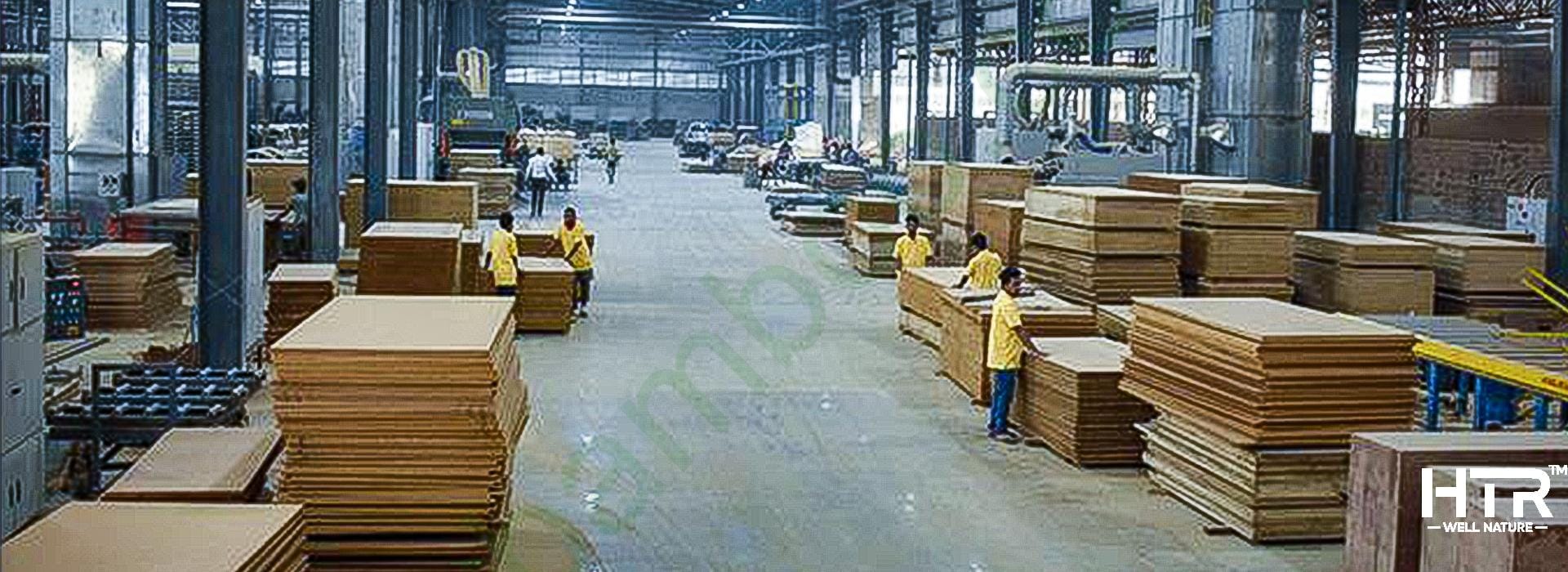
What makes a playfield panel demanding
A playfield is one of the harder applications a panel can face. Four properties decide whether a board qualifies:
Dimensional stability. A playfield sits inside a cabinet at a fixed angle for decades, in arcades and homes with wildly different humidity. Any cupping or twisting throws off ball behavior and ruins gameplay. Bamboo’s dense, uniform strip structure gives it low movement compared with many hardwood plywoods.
Flatness. Inserts and mechanisms are mounted to sub-millimeter tolerances. The blank has to arrive flat and stay flat through machining.
Surface hardness. A steel ball repeatedly strikes the finished playfield. Hardness varies with bamboo construction, density, adhesive system and finish, so the buyer needs to validate the quoted panel and coating stack rather than rely on a generic species comparison.
CNC machinability. A playfield is routed with hundreds of holes and pockets for inserts and mechanisms. The panel must cut clean edges without tear-out or delamination. Glue-line quality and consistent density across the sheet matter as much as the raw hardness number.
The requirements
The specification settled into two candidate constructions, quoted side by side so the customer’s engineers could test both:
| Item | Specification |
|---|---|
| Panel size | 610 x 1220 mm (the standard 24″ x 48″ playfield blank) |
| Thickness | 13.5 mm |
| Construction A | Solid bamboo plywood, all-bamboo layers |
| Construction B | Bamboo-faced board: top and bottom bamboo layers with a plywood center core |
| Surface finish | Sanded only, no coating (customer applies its own finish system) |
| Sample stage | 10 pieces per construction for in-house testing |
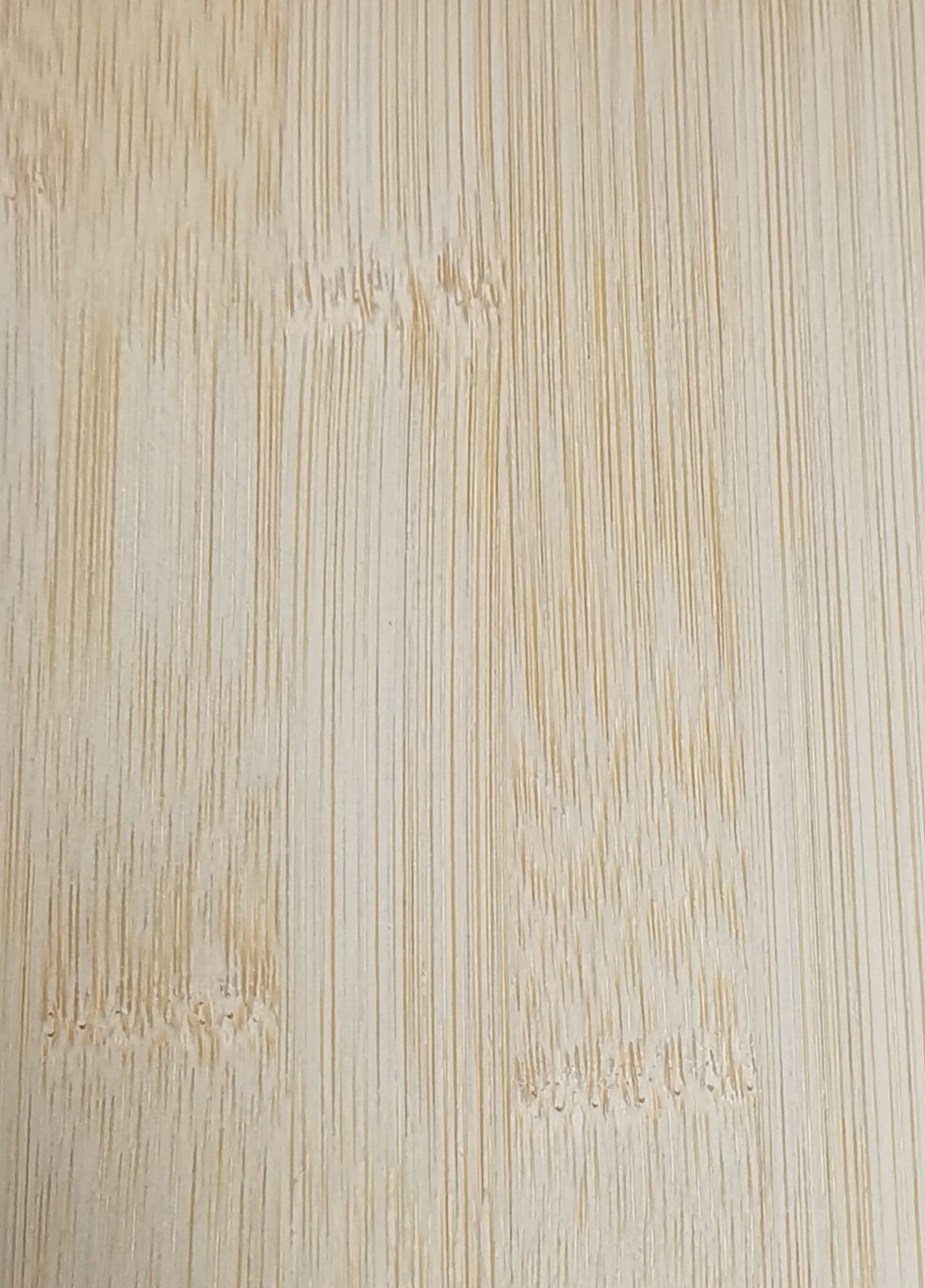
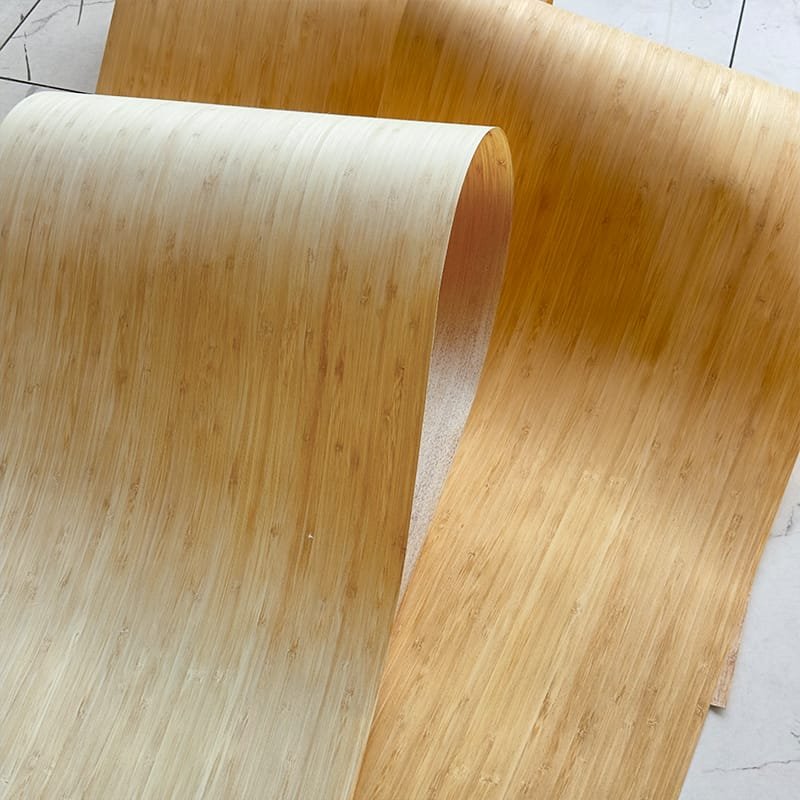
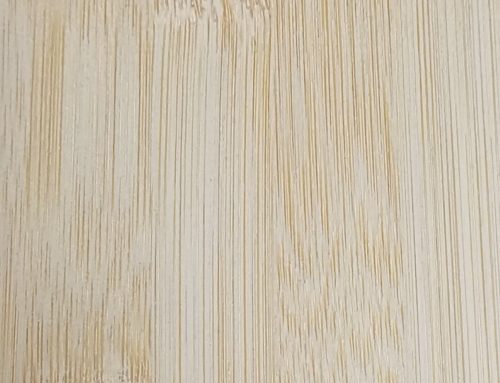
| Veneer trial | Natural side-pressed bamboo veneer, 2500 x 630 x 0.45 mm |
| Volume ladder under discussion | 500 / 1,000 / 2,500 / 5,000 pieces |
The sanded-only clause deserves a note. Early drafts of the specification went back and forth until the surface-finish language was exact. The customer runs its own coating and artwork process, so HTR’s job was to deliver a precision substrate, not a finished surface. Getting that boundary written clearly into the quote saved both sides from an expensive misunderstanding.
How HTR approached it
HTR did not start with the playfield board. The relationship started smaller, with a paid order of ultra-thin 0.45mm side-pressed bamboo veneer in 2500x630mm sheets. An 0.45mm veneer is an unforgiving product: any inconsistency in strip preparation or pressing shows up immediately. For the buyer, it was a low-cost way to judge HTR’s precision before committing to structural panels.
When the conversation moved to the playfield blank, HTR quoted both constructions rather than pushing one. All-bamboo panels and ply-core hybrids behave differently in weight and machining feel, and a game engineer needs real boards on a real CNC to decide. Sending both lets the customer’s own testing settle the question.
For US buyers, construction also affects product classification and the documents an importer may need. An all-bamboo panel and a bamboo-faced wood-core panel should not be assumed to share the same classification or duty treatment. Review the quoted construction with your customs broker and use HTR’s import-planning guide as a starting checklist, not as a customs ruling.
The process: sample, evaluation, production planning
Step 1: Veneer sample order. The customer placed a small paid order of 0.45mm side-pressed veneer sheets. This proved HTR’s thin-material capability and established the working relationship, including freight arrangements for sample shipments. Our shipping page explains how we handle sample and volume logistics.
Step 2: Playfield specification. Over several revisions, the specification was refined to the final wording: 610x1220x13.5mm, both constructions, sanded finish only.
Step 3: Plan a two-construction sample comparison. HTR quoted 10 pieces of the solid bamboo board and 10 pieces of the bamboo-faced plywood-core board. The buyer indicated that a purchase order would come through its trading partner. The subsequent machining and finishing feedback has not yet been verified for publication.
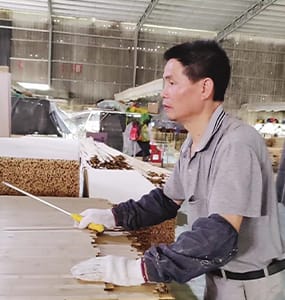
Step 4: Volume planning. With test panels in the pipeline, the customer requested lead times for 500, 1,000, 2,500, and 5,000 pieces, benchmarking HTR against suppliers in Vietnam and Sweden.
What is documented so far
The email and quotation record proves the specification work and commercial evaluation below. It does not yet prove that the samples passed testing or that a volume order was awarded.
- A documented 0.45mm side-pressed veneer option that opened the material discussion.
- Two constructions quoted to identical dimensions for a planned A/B comparison on the buyer’s CNC and finishing line.
- A sanded-only substrate spec written into the quotation, protecting its proprietary finishing process.
- Requested price and lead-time planning at 500, 1,000, 2,500 and 5,000 pieces.
The useful result at this stage is a testable specification and a clear scale-up ladder. Customer test feedback and any production-volume decision remain open and should not be presented as a completed outcome.
What this means for buyers like you
If you build game machines or any product where the panel is a precision component rather than a commodity sheet, the pattern here transfers directly. Start with a small paid sample that stresses the supplier’s weakest point. Ask for competing constructions quoted to the same dimensions instead of accepting a single recommendation. Keep your finishing process in-house by specifying the exact surface state you want delivered. And if you import into the US, make the all-bamboo versus wood-core question part of your cost model from day one.
HTR runs this sample-first process for custom panels routinely. Browse the full range in our product catalog or across our bamboo products pages, and bring us a drawing.
Why B2B Buyers Choose HTR Bamboo
HTR Bamboo has manufactured bamboo panels and veneer since 2009. For custom projects, FSC claims, emissions reports, adhesive details and other documents must be matched to the quoted construction and order; review the scope on our certifications page. HTR supports OEM and ODM work across custom dimensions, constructions and surface requirements, subject to sample approval and the final quotation.
Ready to Spec Your Own Custom Panel?
Send us your panel dimensions and application, and we will come back with construction options and a sample plan. Most sample quotations go out within two business days via our contact page.
Frequently Asked Questions
Share This Story, Choose Your Platform!
About the Author: HTR Bamboo Editorial Team

Related Posts
On this page
Need bamboo specifications?
Latest Posts
Copyright 2020 – 2030 HTR Bamboo
All Rights Reserved!

 English
  German
  Spanish
  Vietnamese